
Εξοπλισμός
Modern infection-control protocols in the dental practice
21 July 2026 · 7 min read
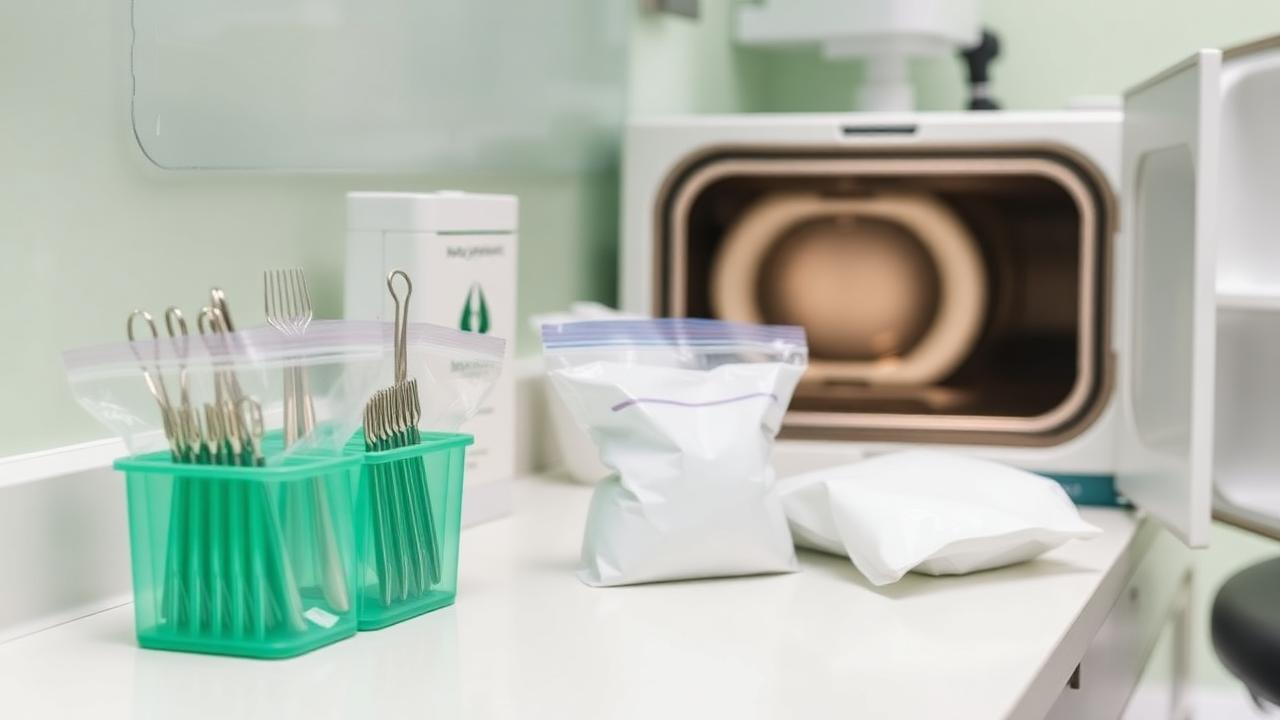
How infection control is realistically organised in a dental practice: clean and dirty zones, instrument flow, surfaces, personal protection and documentation.
Infection control in a dental practice is not judged by equipment but by flow: where each instrument goes, who touches it and with what. A well-designed reprocessing room makes the correct step also the easiest step.
1. Separate dirty and clean
The reprocessing bench needs a clear, one-way direction: receiving → cleaning → drying/inspection → pouching → autoclave → storage. No path ever runs backwards.
- Use closed transport containers from the surgery to the reprocessing room.
- Keep separate instrument baskets per category so nothing is sorted with bare hands.
- Mark the zones visually (bench colour, tape, dedicated shelves).
2. Personal protection at every stage
PPE changes by zone, not only by patient:
- In the clinical area: examination gloves, mask, eye protection. Soft Care surgical masks are changed for every patient or as soon as they become damp.
- In reprocessing: heavy-duty gloves, apron, eye protection while cleaning.
- Always: hand hygiene before and after gloves - gloves never replace washing.
PPE consumables are in the Consumables category.
3. Surfaces and barriers
Split surfaces into two groups:
- Contact surfaces (light handles, chair controls, air-water syringe): protect with a single-use barrier and change it per patient.
- Transfer surfaces (benches, working tray): clean and disinfect with an approved product, respecting the label contact time.
Use disposable examination rolls such as Soft Care Premium 2ply 58cm x 50m to cover surfaces and trays.
4. The instrument cycle
The principle is the same as in any clinical setting:
- Soak immediately after use in a non-corrosive solution, e.g. Prosept Fortis.
- Ultrasonic cleaning with instruments open.
- Rinse, dry fully, inspect visually.
- Pouch in sterilisation pouches with a chemical indicator.
- Class B autoclave cycle at 134 °C with a drying phase.
Handpieces are cleaned, lubricated and sterilised per the manufacturer''s instructions - external wiping is not enough.
The full range of solutions and pouches lives in the Disinfection / Sterilization category.
5. Water, suction, waste
- Flush water lines at the start of the day and for 20–30 seconds between patients.
- Clean the suction system daily with the specified product and check the filters.
- Sharps in a rigid container, never a bag; clinical waste in its own stream.
6. Documentation and training
A protocol only exists if it is written down and trained. Keep:
- A daily autoclave cycle log with indicator results.
- A weekly biological test.
- Staff training and vaccination records.
- Short, posted instructions at each station.
Checklist
- Clean and dirty zones with one-way flow.
- Single-use barriers on all contact surfaces.
- A complete instrument cycle documented per load.
- Enough consumable stock that the protocol is never interrupted.
Related products
- Categories: Disinfection / Sterilization, Consumables - Prosept Fortis 1 L - Kraft sterilisation pouches 100x200 mm