
Επαγγελματική υγιεινή και ασφάλεια / Professional hygiene and safety
Fungal Nail Infections: Recognition, Referral and Hygiene Protocol
1 September 2026 · 10 min read
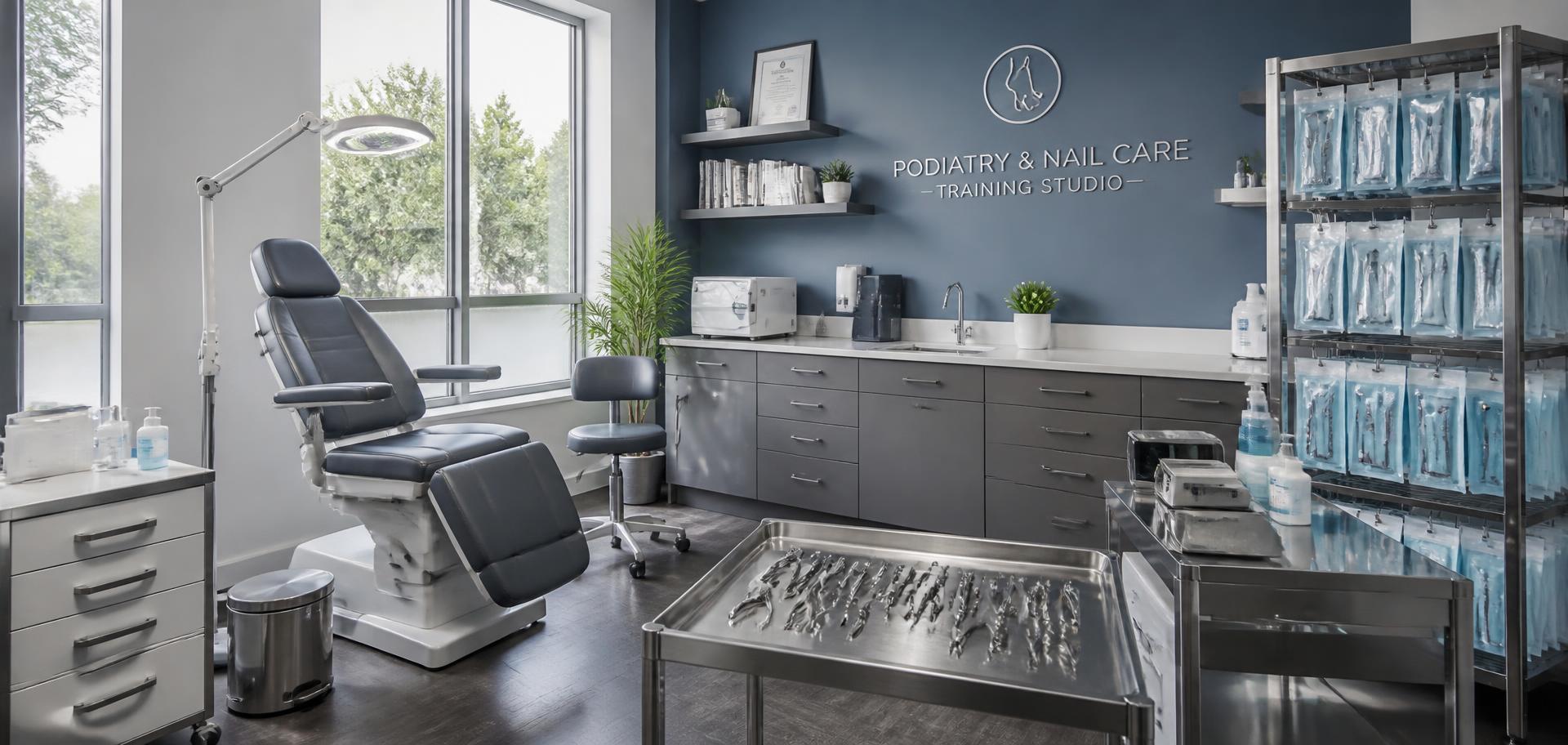
A practical guide for podiatry and nail professionals on recognising suspicious nail changes, respecting scope-of-practice boundaries, arranging safe referral and implementing a robust hygiene protocol.
Why a cautious approach is essential
Onychomycosis is a fungal infection of the nail unit, but many nail dystrophies have a similar appearance. Trauma, psoriasis, lichen planus, bacterial colonisation, repeated footwear pressure and certain systemic conditions can also cause thickening, discolouration or separation.
The podiatry or nail professional’s role is to recognise suspicious features, work within their scope, prevent cross-contamination and refer appropriately. Definitive diagnosis and treatment selection belong to a suitably qualified healthcare professional and may require laboratory confirmation.
Clinical recognition: what to observe
Assessment begins before any service. Examine every nail, the surrounding skin and interdigital spaces under good lighting and without a cosmetic coating. Suspicious findings may include:
- White, yellow or brown discolouration, often beginning at the distal or lateral edge.
- Subungual hyperkeratosis, meaning a build-up of material beneath the nail plate.
- Thickening, dullness, brittleness or an irregular surface.
- Onycholysis, with separation of the plate from the nail bed.
- White, superficial, chalky areas that scrape away readily.
- Deformity or gradual spread to additional nails.
- Associated scaling, fissures or itching on the sole and between the toes.
None of these signs confirms a fungal infection on its own. Record which nails are affected, the extent of the change, any pain and when it began. Photographs should be taken only with informed consent and in accordance with personal-data protection requirements.
Focused history without diagnosing
Brief, neutral questions help assess risk and organise referral:
- When did the change appear, and is it progressing?
- Was there trauma, tight footwear or intensive sporting activity?
- Is there pain, redness, swelling, discharge or odour?
- Are other nails or household members affected?
- Has there been a previous assessment, sample test or treatment?
- Is there diabetes, peripheral vascular disease, neuropathy, immunosuppression or another relevant condition?
Avoid statements such as “you have nail fungus.” Instead say: “This change can be consistent with more than one condition and should be assessed by a dermatologist or another appropriate healthcare professional.”
When to refer
Refer for assessment when there is persistent or extensive dystrophy, suspected infection, an uncertain presentation or failure of previous management. Referral is particularly important before any cosmetic coverage because a coating may obstruct monitoring and retain moisture.
Prompt or urgent medical assessment is required when you observe:
- Severe pain, warmth, spreading redness, swelling, pus or systemic illness.
- A wound, bleeding, ulceration or necrosis.
- A new dark longitudinal band, irregular pigmentation or colour extending onto the surrounding skin.
- A suspicious change in a person with diabetes, poor circulation, sensory loss or immunosuppression.
Do not aggressively remove material to “clean” the nail, and do not recommend medication outside your lawful scope. If sampling is needed, follow the clinician’s or laboratory’s instructions before filing the nail or applying products.
Deciding whether to provide or postpone a service
For a suspicious nail that has not been assessed, the safest option is generally to postpone the cosmetic service and refer the client. Do not apply gel, acrylic, gel polish or an occlusive coating. Never use a shared file, buffer or sanding cap.
If supportive care is permitted by local law, your training and the business protocol, it must be gentle, non-traumatic and free from treatment claims. Stop immediately if pain, bleeding or skin damage occurs. Document each case, including the decision, advice and referral provided.
Hygiene protocol before and during the service
Consistency is more important than occasional use of powerful products. Maintain a clear workflow from the “dirty” area towards the “clean” area.
- Perform hand hygiene before and after every client.
- Cover abrasions and wear appropriate disposable gloves. Aurelia Bold nitrile gloves provide a personal barrier, but do not replace hand hygiene.
- Wear clean work clothing and, when dust is generated, use an appropriate mask, eye protection and effective extraction.
- Set out only the instruments required. Do not touch drawers, a mobile phone or clean packages with contaminated gloves.
- Use single-use consumables where indicated and discard them immediately afterwards.
- Minimise dust generation. Nail dust should be captured at source and never removed by blowing or dry sweeping.
See the Disinfection / Sterilisation category for equipment and consumables that can form part of an organised reprocessing system.
Instrument reprocessing: cleaning, disinfection and sterilisation
These terms are not interchangeable. Cleaning removes organic debris, disinfection reduces microorganisms, and sterilisation destroys all forms of microbial life when performed through a validated cycle. Always follow national regulations, the manufacturer’s instructions and the instrument’s risk classification.
After use:
- Transfer instruments to the dirty area in a closed, puncture-resistant container.
- Clean them promptly using an approved method. Ultrasonic equipment can support cleaning, but it does not sterilise instruments by itself.
- Rinse, dry completely and inspect joints, grooves and cutting surfaces.
- Apply the required disinfection step and/or package for sterilisation, according to material compatibility.
- Use a validated steriliser at the correct time and temperature. The Microstop PROTECT PRO dry-heat steriliser must be operated strictly according to its manufacturer’s instructions and applicable requirements.
- Record the cycle, check the indicators and store intact packages in a clean, dry location.
Rotary bits require meticulous removal of debris from every flute. Prosept Burs rotary-instrument disinfectant should be used only at the stated dilution and contact time, and on compatible surfaces. Disinfecting a bit does not replace sterilisation where sterilisation is required.
Environmental cleaning and consumable management
After every client, remove gloves and consumables without touching clean surfaces. First remove visible debris, then disinfect the chair, footrest, worktop, handles, lamp, equipment controls and product containers while observing the disinfectant’s required contact time.
Empty or replace dust-extraction filters according to the device instructions while wearing personal protective equipment. Do not reuse porous consumables. Files, buffers, wooden sticks and sanding caps are either single-use or reserved for one client only where permitted, with clearly identified individual storage.
Communicating with the client
The discussion should be private, neutral and non-stigmatising. Explain that appearance alone cannot establish a diagnosis and provide written referral guidance. General hygiene advice may include:
- Drying the feet daily, especially between the toes.
- Changing into clean socks and rotating footwear so it can dry.
- Not sharing instruments, towels or footwear.
- Avoiding picking, aggressive filing and cosmetic coverage before assessment.
Do not promise an outcome or present a cosmetic or disinfectant product as a treatment. Professional safety depends on early recognition, clear referral, documentation and strict hygiene.